LOBRIGO


A property management company based in Vegas
Elysian Living
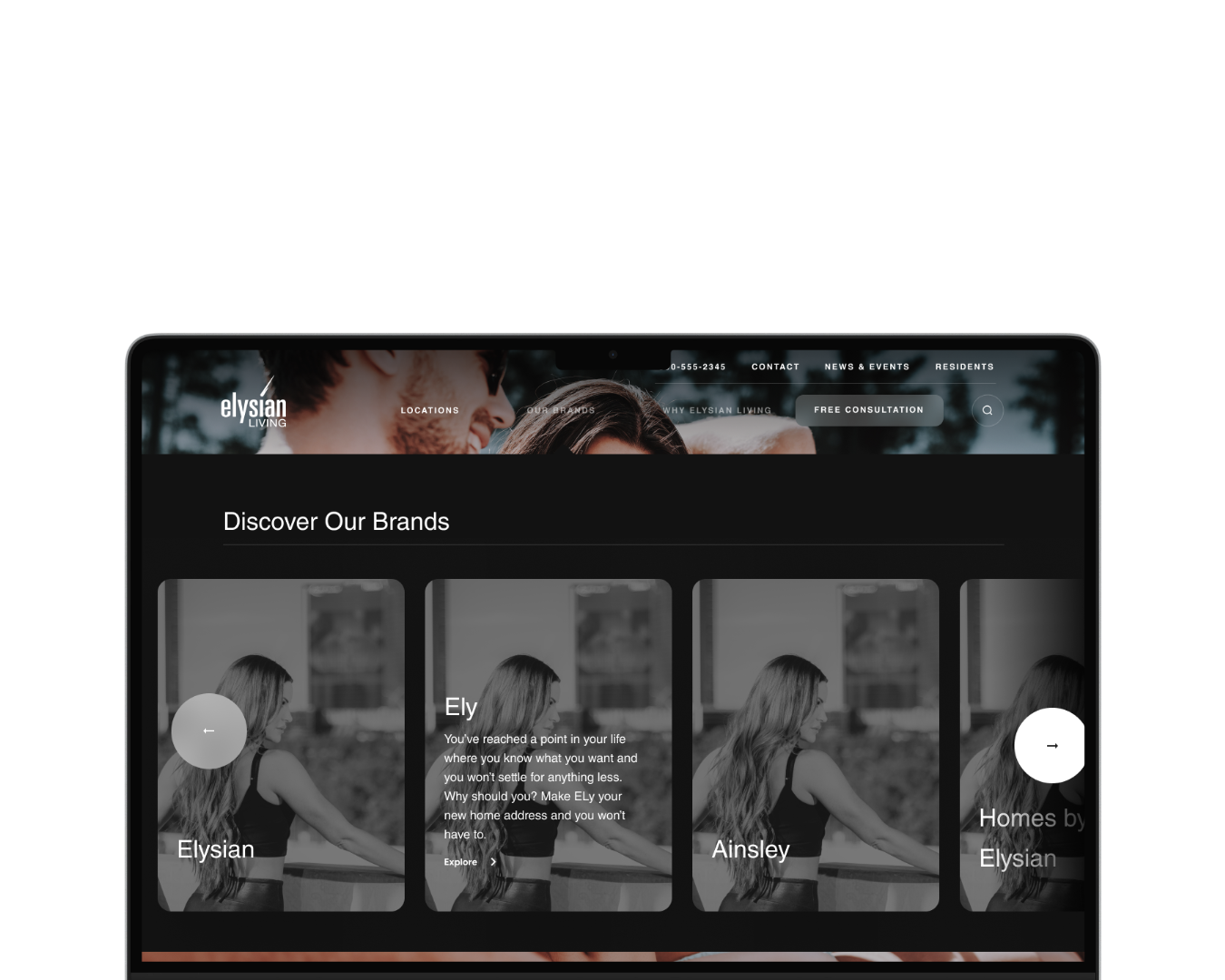
ABOUT THE CLIENT
Elysian Living is a premier luxury residential brand with an expansive portfolio across Nevada, Utah, and Texas. As the brand scaled, the existing digital architecture faced challenges in maintaining a localized feel across diverse regions. I spearheaded the redesign of critical website navigation and microsite layouts to create a scalable, intuitive user experience. By modularizing site components and refining the information architecture, I ensured the digital platform could support rapid portfolio growth while maintaining the sophisticated aesthetic expected of a luxury leader.
COLLABORATORS
Heather Lobrigo: Preliminary Research and UI/UX Designer
Creative Director
Development Team
Client Stakeholders
INDUSTRY
Property Management
SERVICES
Preliminary Research
UX Design
Goals
Introduce distinct sections for Nevada, Utah, and Texas to help users quickly find communities and content relevant to their area.
Group related content such as properties, amenities, and community features for a more
intuitive experience.
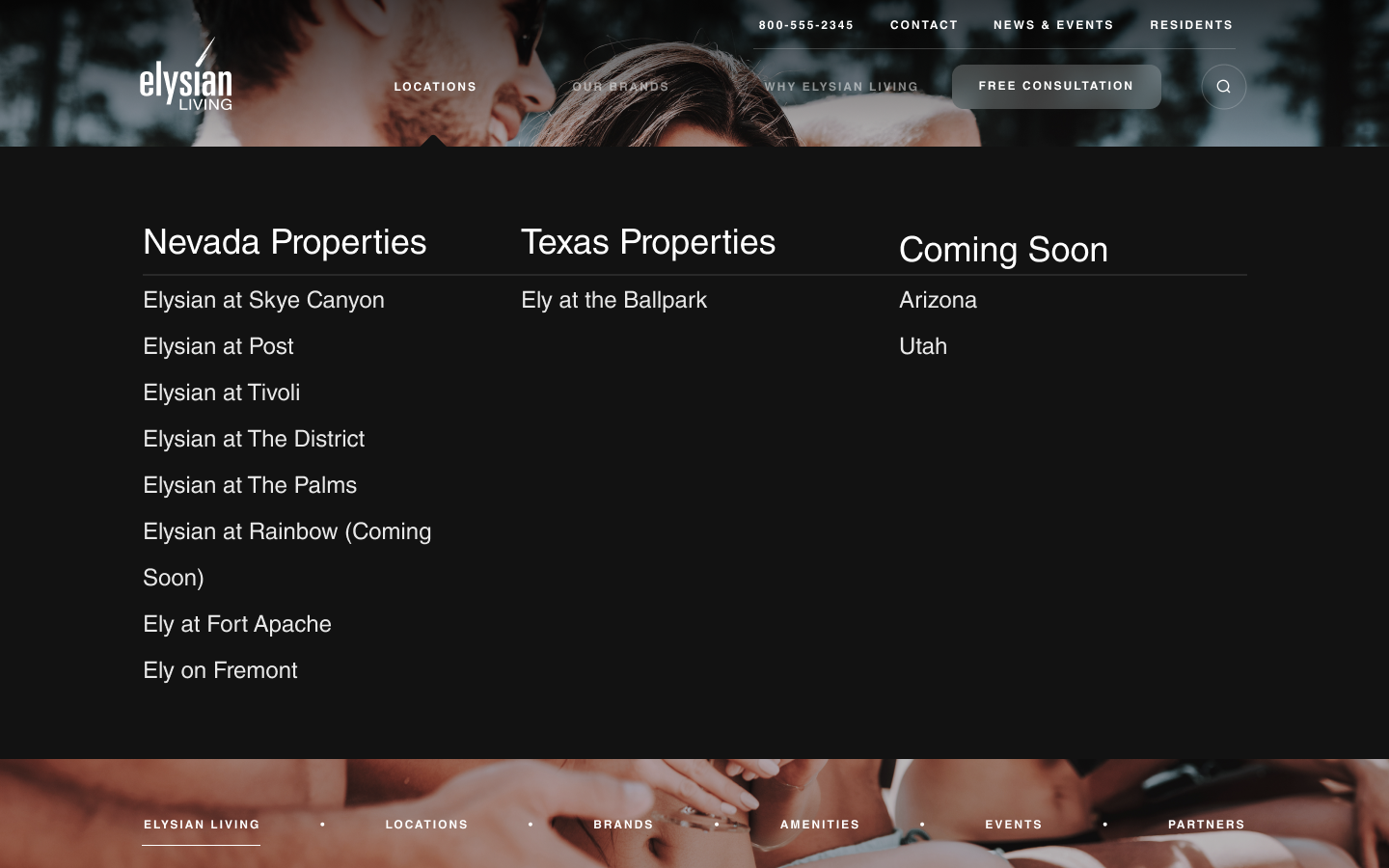
Build a scalable MegaNav system capable of expanding with Elysian’s future growth into new states or housing categories.


1
2
3
Process
I worked closely with my Creative Director to ensure that all design updates followed Elysian’s brand guidelines and maintained a consistent visual language. I collaborated with the development team to confirm technical feasibility and align on how new filtering and navigation behaviors would function across templates. Throughout the process, I communicated directly with the client, presenting design mockups and explaining the reasoning behind each change to ensure alignment with their goals.
Objective 1: Expand Brand Presence Across States
Notes:
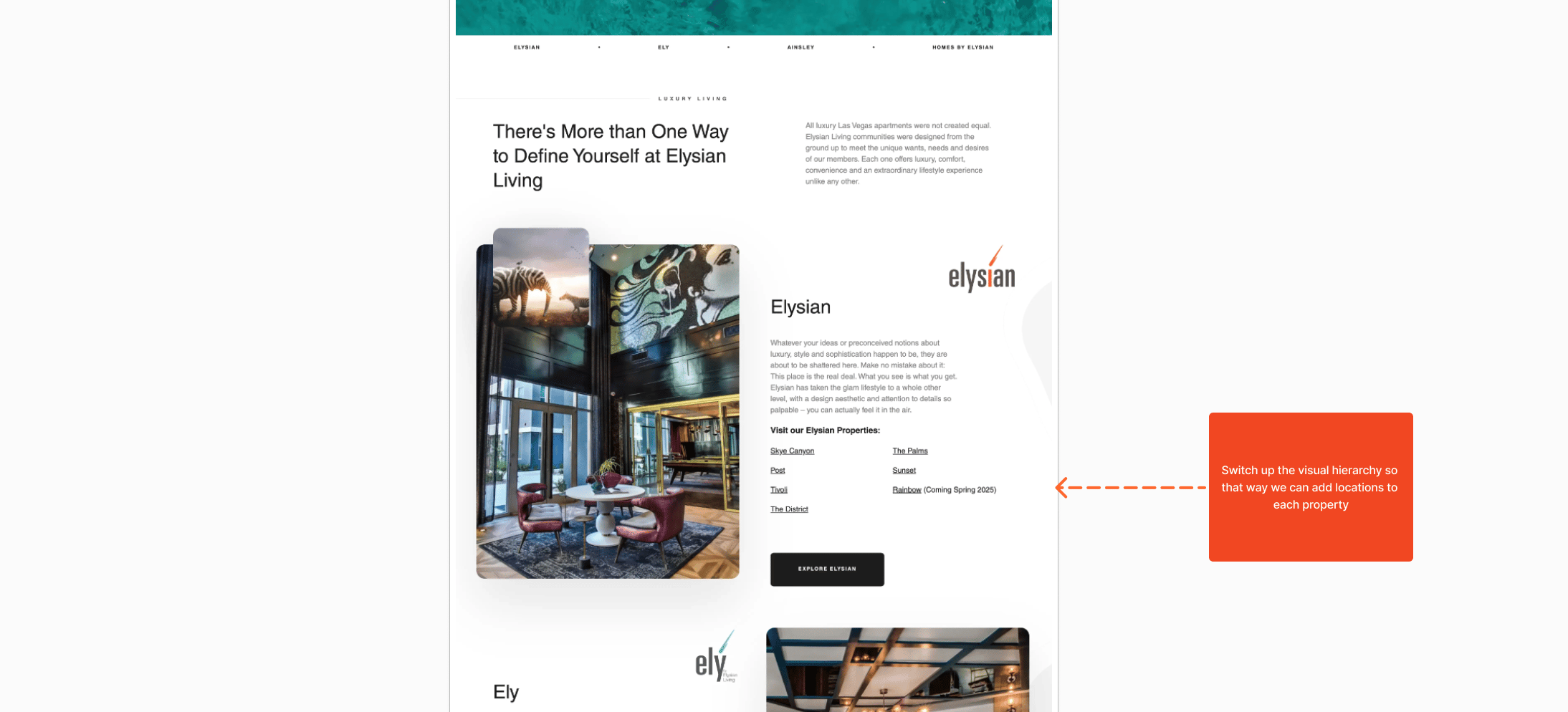
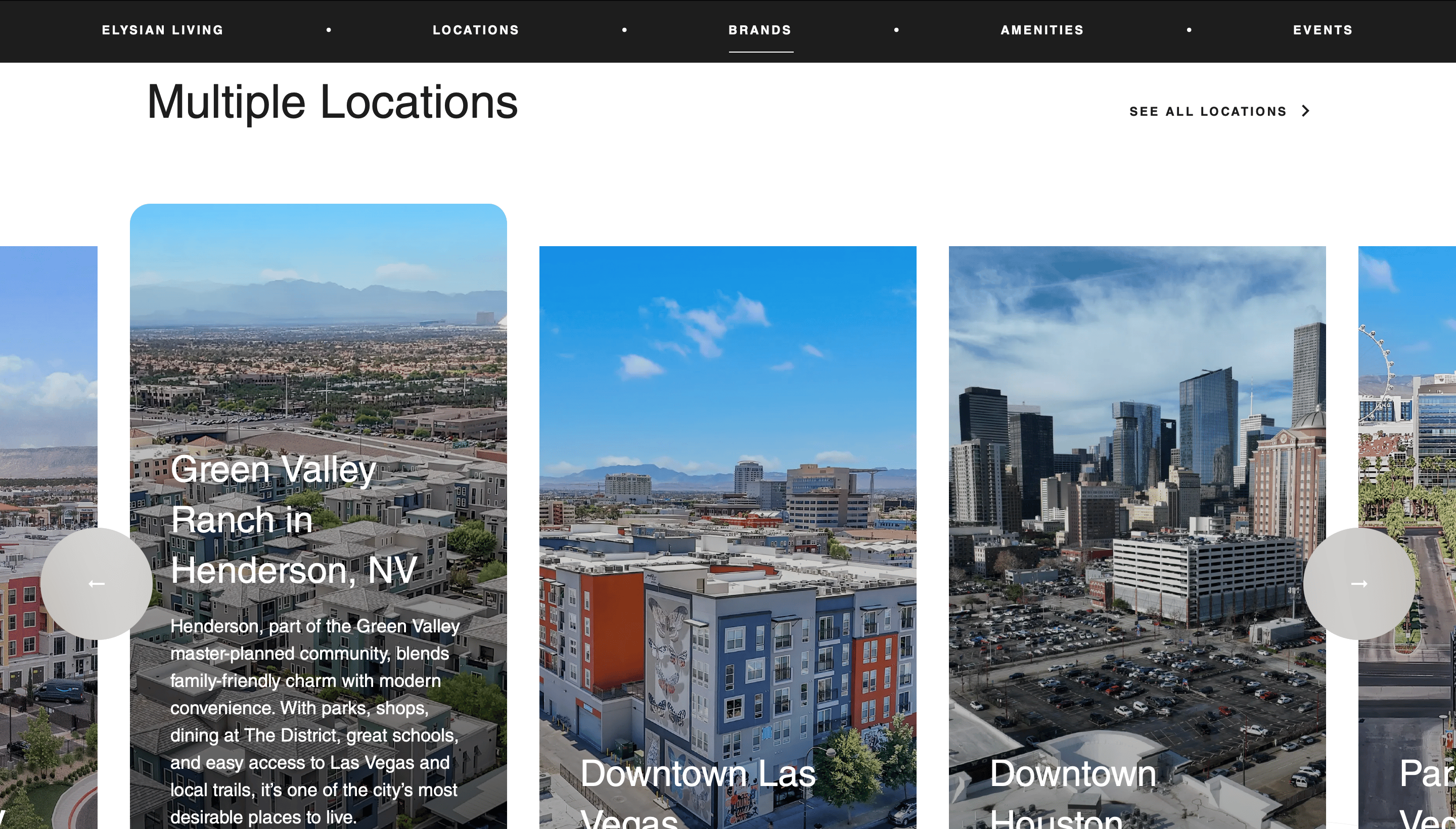
Elysian’s website primarily showcased Nevada communities. Property pages, blog content, and community highlights lacked clear differentiation by location, making it difficult for users to explore offerings outside the state. The navigation and visual hierarchy reinforced this narrow focus.
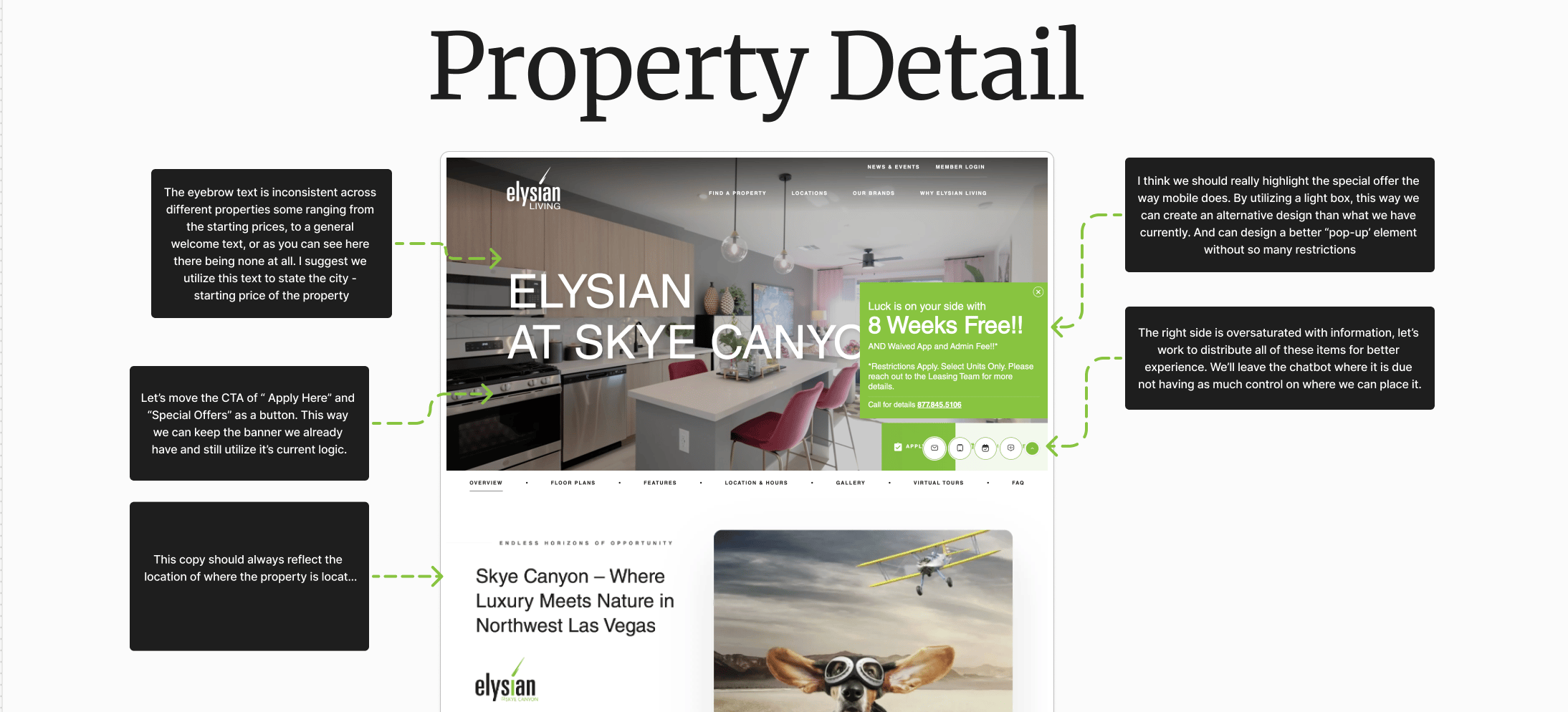
Our Brands Page Before with Suggestions:
During the initial phase of the project I went through each
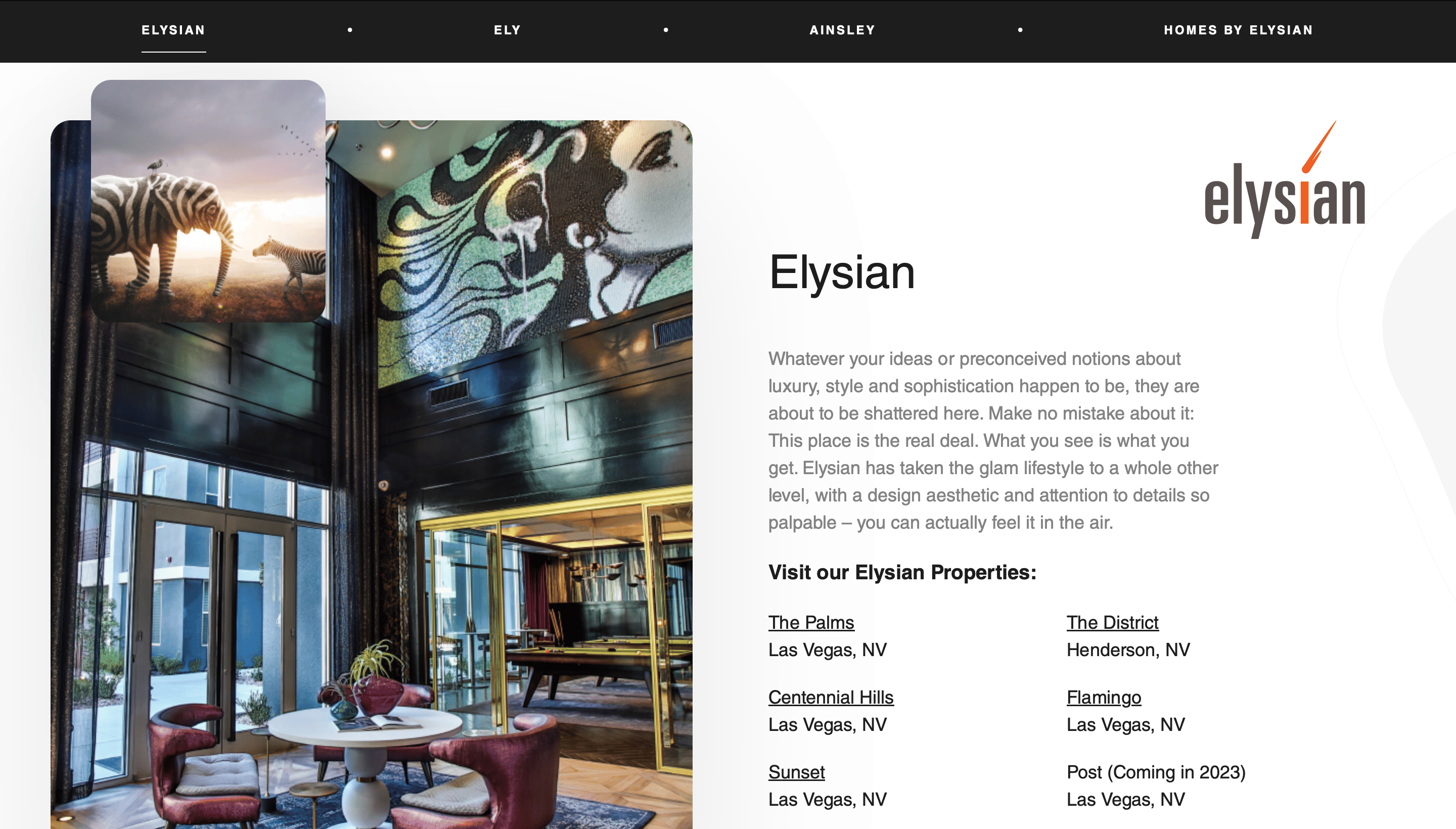
Our Brands Page After:
During the initial phase of the project I went through each
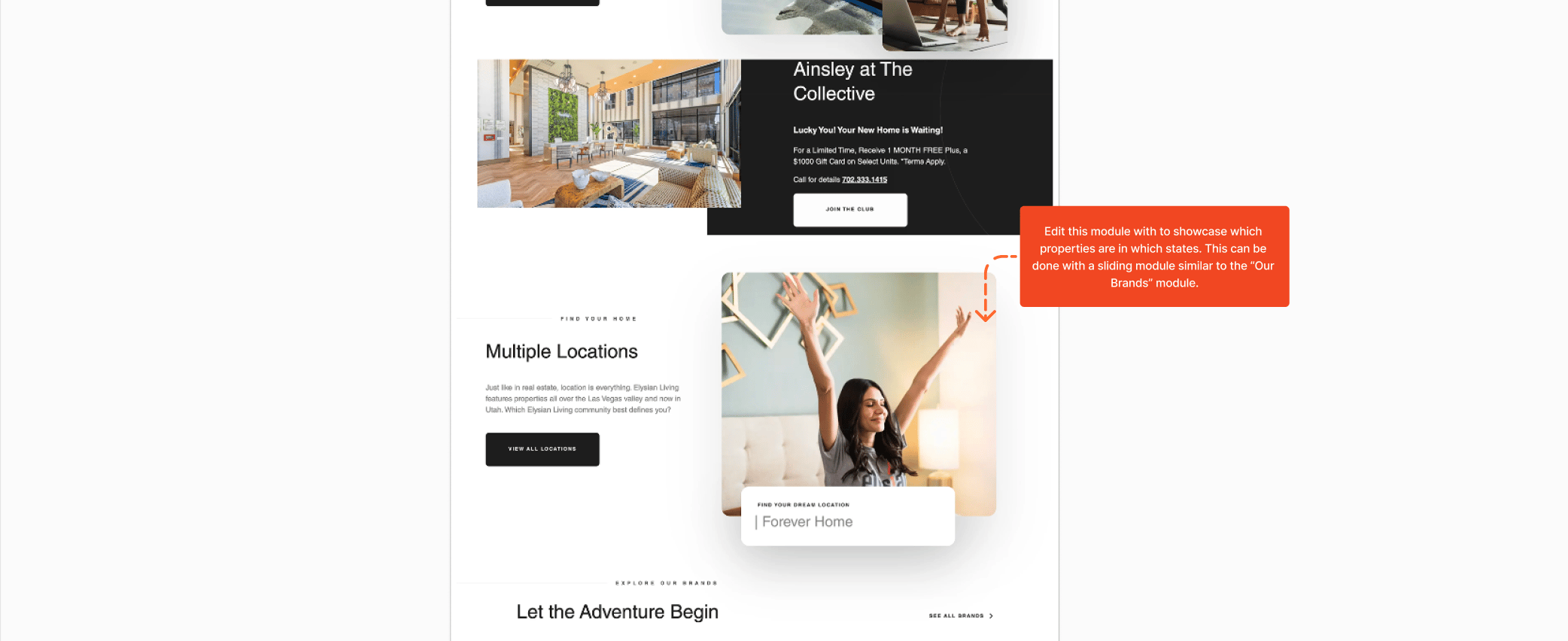
Homepage Before with Suggestions:
During the initial phase of the project I went through each
Homepage After
During the initial phase of the project I went through each
Objective 2: Optimize Microsite User Experience
Notes:
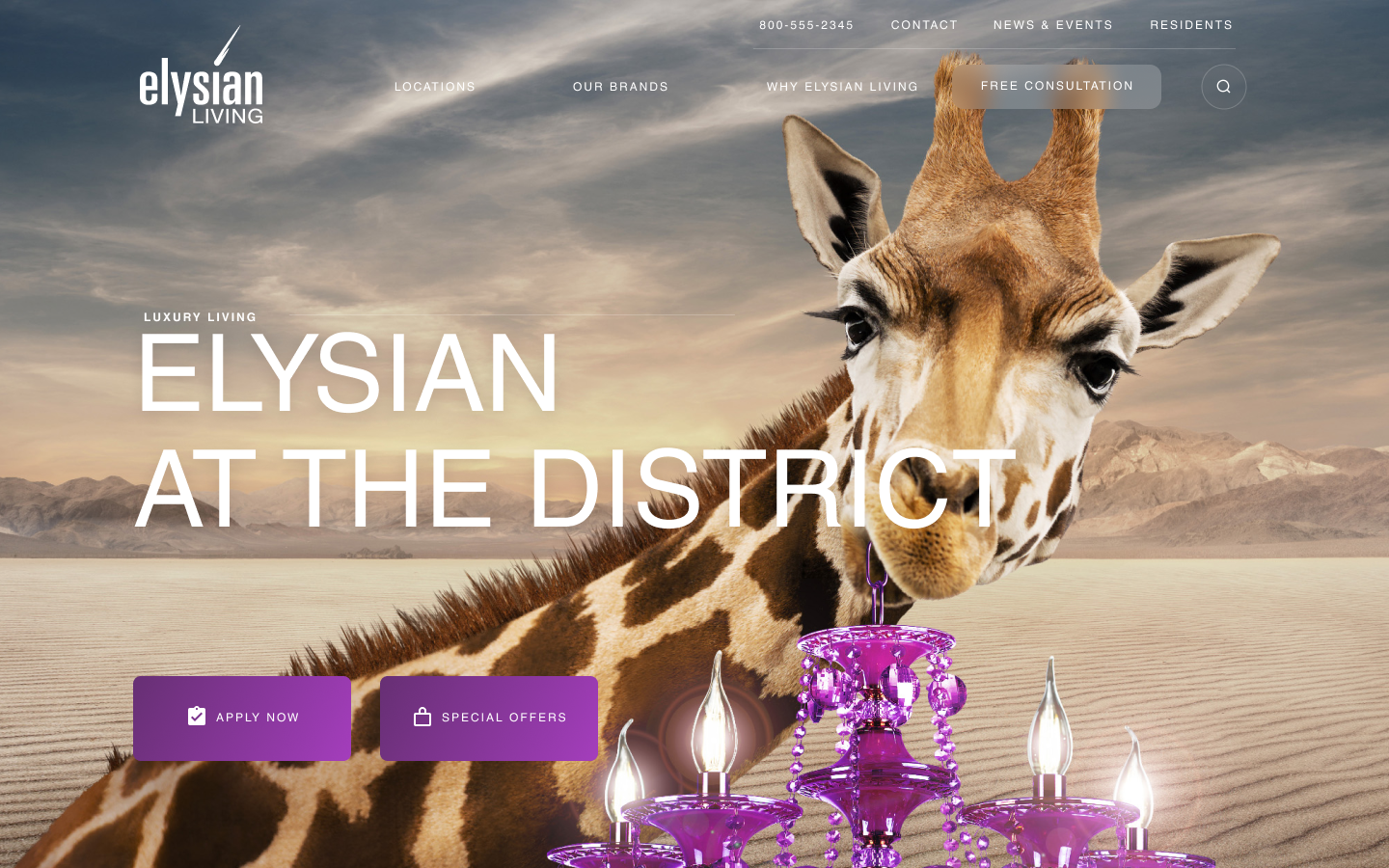
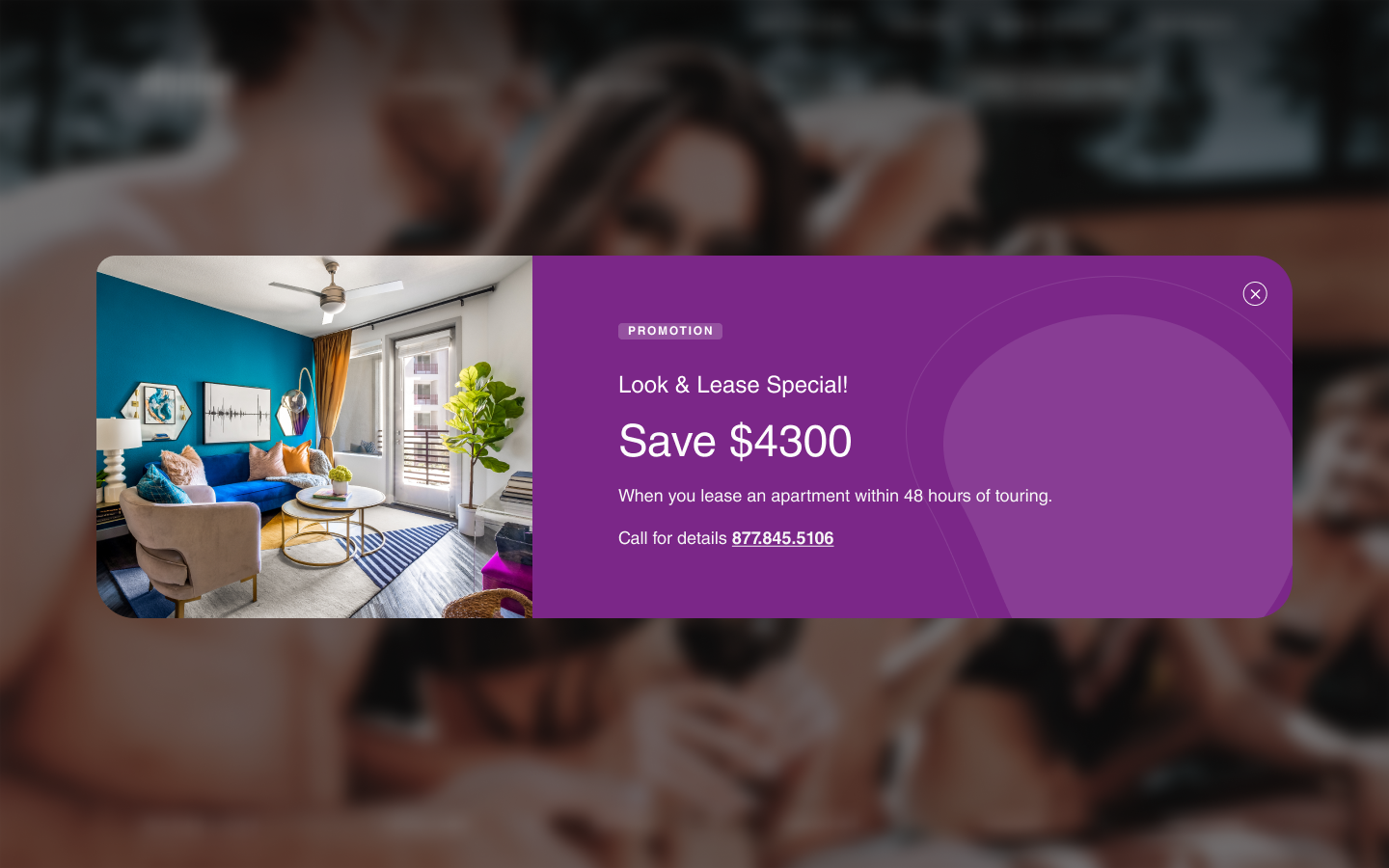
The right-side navigation panel within property microsites was difficult to use and visually inconsistent. In addition, the client needed a new plugin added to these pages. Once implemented, the plugin’s interface overlapped key buttons and made some calls-to-action inaccessible on mobile and
desktop views.
Our Brands Page After:
During the initial phase of the project I went through each
Homepage After
During the initial phase of the project I went through each
Objective 3: Create a Future-Proof Navigation System
Notes:
The mobile experience for the microsite, became difficult to navigate with the plugin as well. The combination of the plugin, on-page CTAs, and the scroll to the different subpages made it crowded for the user.
Mega Navigation Before with Suggestions
During the initial phase of the project I went through each
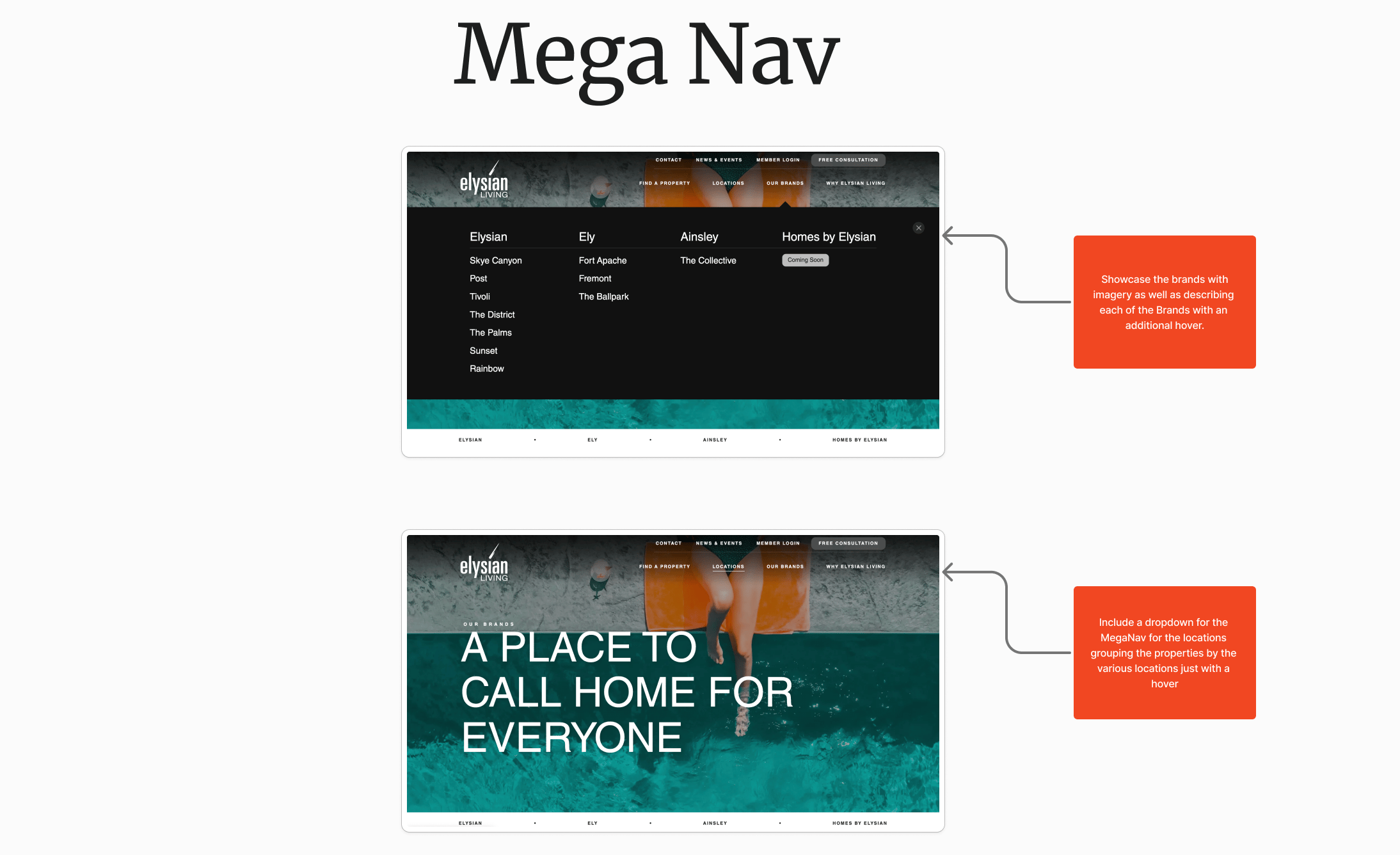
Mega Navigation After
Design a scalable navigation system that supports Elysian’s continued expansion into new states and property types. The structure needed to remain flexible, allowing new locations and content categories to be added without disrupting the existing user experience or requiring a full redesign.
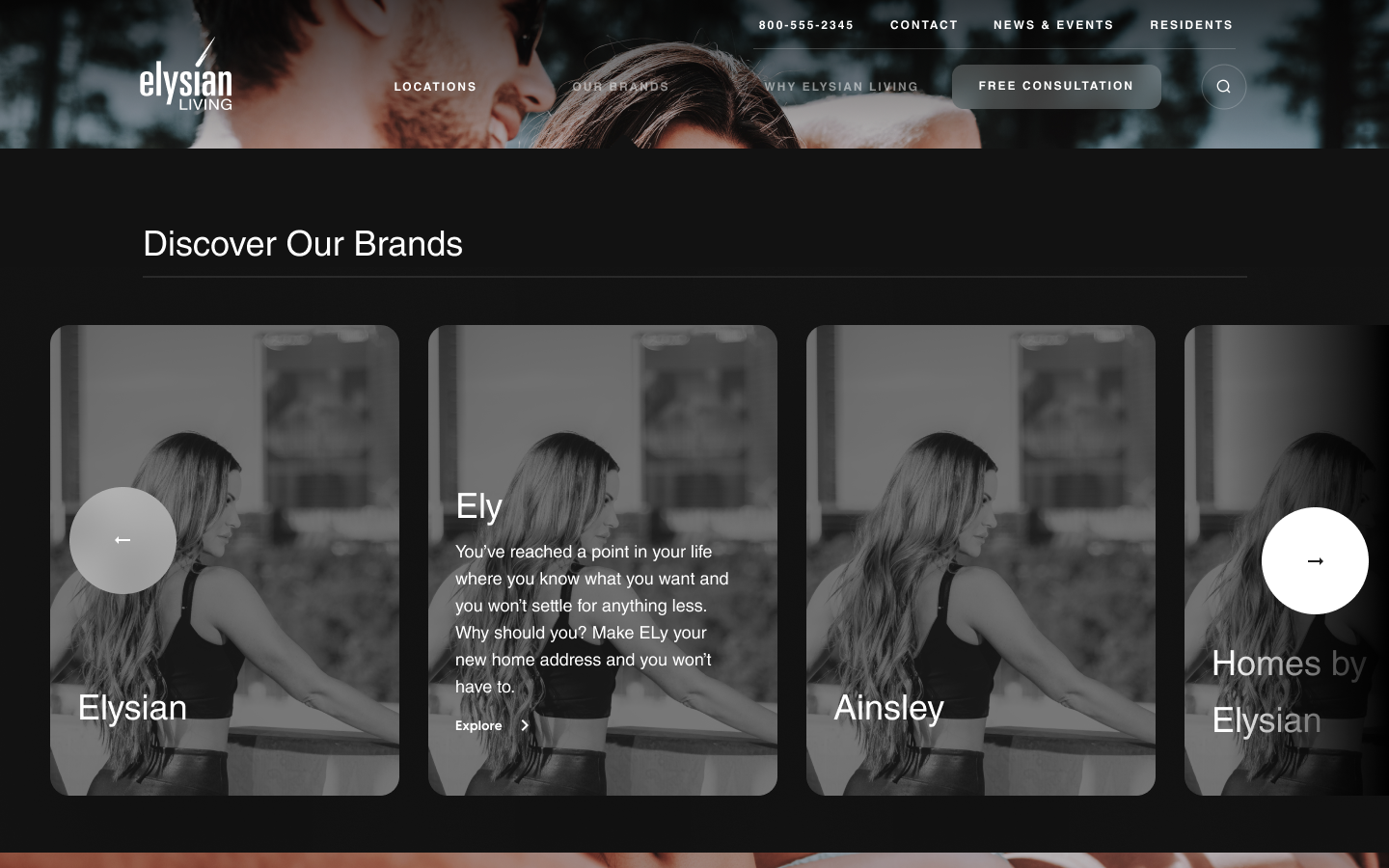
Results
With the final design that was created our client was satisfied with the end result.
If I were given the opportunity to do User Testing with this new website I would have tested out how efficiently users could locate Demers Glass’s more obscure services. As well as speaking with them on how they feel about our form that would connect them to the sales team.
Lobrigo
A Product Designer / UX Designer

ABOUT THE CLIENT
Demers Glass is a premier Arizona-based leader in glass services. On this project, I led the Information Architecture (IA) and structural UX design. I was responsible for crafting the comprehensive sitemap and complex user flows to ensure a logical transition between commercial and residential service funnels. My work included the creation of high-fidelity wireframes and the design of a custom iconography suite, providing a technical yet accessible visual language that aligned with the company’s reputation for craftsmanship.
COLLABORATORS
Heather Lobrigo: Preliminary Research and UX Designer
Frank Something: UI Designer
Gaetan Gaebor: PM
Lucas Kwasnik & Chris : Developement
INDUSTRY
Construction
SERVICES
Preliminary Research
UX Design
Goals
1
Expand Brand Presence Across States:
Introduce distinct sections for Nevada, Utah, and Texas to help users quickly find communities and content relevant to their area.
2
Optimized Microsite UX:
Group related content such as properties, amenities, and community features for a more
intuitive experience.
3
Future-Proof Structure:
Build a scalable MegaNav system capable of expanding with Elysian’s future growth into new states or housing categories.
Process
I worked closely with my Creative Director to ensure that all design updates followed Elysian’s brand guidelines and maintained a consistent visual language. I collaborated with the development team to confirm technical feasibility and align on how new filtering and navigation behaviors would function across templates. Throughout the process, I communicated directly with the client, presenting design mockups and explaining the reasoning behind each change to ensure alignment with their goals.
Objective 1: Expand Brand Presence Across States
Notes:
Elysian’s website primarily showcased Nevada communities. Property pages, blog content, and community highlights lacked clear differentiation by location, making it difficult for users to explore offerings outside the state. The navigation and visual hierarchy reinforced this narrow focus.
Our Brands Page Before with Suggestions:
During the initial phase of the project I went through each
Our Brands Page After:
During the initial phase of the project I went through each
Homepage Before with Suggestions:
During the initial phase of the project I went through each
Homepage After
During the initial phase of the project I went through each
Homepage Before with Suggestions:
During the initial phase of the project I went through each
Homepage After
During the initial phase of the project I went through each
Objective 2: Optimize Microsite User Experience
Notes:
The right-side navigation panel within property microsites was difficult to use and visually inconsistent. In addition, the client needed a new plugin added to these pages. Once implemented, the plugin’s interface overlapped key buttons and made some calls-to-action inaccessible on mobile and
desktop views.
Our Brands Page Before with Suggestions
During the initial phase of the project I went through each
Homepage After
During the initial phase of the project I went through each
Objective 3: Create a Future-Proof Navigation System
Notes:
The mobile experience for the microsite, became difficult to navigate with the plugin as well. The combination of the plugin, on-page CTAs, and the scroll to the different subpages made it crowded for the user.
Mega Navigation Before with Suggestions
The original MegaNav was not designed for scalability. Adding new states or property categories often required a full rebuild and risked disrupting the existing layout.
Mega Navigation After
Design a scalable navigation system that supports Elysian’s continued expansion into new states and property types. The structure needed to remain flexible, allowing new locations and content categories to be added without disrupting the existing user experience or requiring a full redesign.
Results
With the final design that was created our client was satisfied with the end result.
If I were given the opportunity to do User Testing with this new website I would have tested out how efficiently users could locate Demers Glass’s more obscure services. As well as speaking with them on how they feel about our form that would connect them to the sales team.
ABOUT THE CLIENT
Elysian Living is a premier luxury residential brand with an expansive portfolio across Nevada, Utah, and Texas. As the brand scaled, the existing digital architecture faced challenges in maintaining a localized feel across diverse regions. I spearheaded the redesign of critical website navigation and microsite layouts to create a scalable, intuitive user experience. By modularizing site components and refining the information architecture, I ensured the digital platform could support rapid portfolio growth while maintaining the sophisticated aesthetic expected of a luxury leader.
COLLABORATORS
Heather Lobrigo: Preliminary Research and UI/UX Designer
Creative Director
Development Team
Client Stakeholders
INDUSTRY
Property Management
SERVICES
Preliminary Research
UX Design
Goals
1
Expand Brand Presence Across States:
Introduce distinct sections for Nevada, Utah, and Texas to help users quickly find communities and content relevant to their area.
2
Optimized Microsite UX:
Group related content such as properties, amenities, and community features for a more
intuitive experience.
3
Future-Proof Structure:
Build a scalable MegaNav system capable of expanding with Elysian’s future growth into new states or housing categories.
Process
I worked closely with my Creative Director to ensure that all design updates followed Elysian’s brand guidelines and maintained a consistent visual language. I collaborated with the development team to confirm technical feasibility and align on how new filtering and navigation behaviors would function across templates. Throughout the process, I communicated directly with the client, presenting design mockups and explaining the reasoning behind each change to ensure alignment with their goals.
Objective 1: Expand Brand Presence Across States
Notes:
Elysian’s website primarily showcased Nevada communities. Property pages, blog content, and community highlights lacked clear differentiation by location, making it difficult for users to explore offerings outside the state. The navigation and visual hierarchy reinforced this narrow focus.
Our Brands Page Before with Suggestions:
During the initial phase of the project I went through each
Our Brands Page After:
During the initial phase of the project I went through each
Homepage Before with Suggestions:
During the initial phase of the project I went through each
Homepage After
During the initial phase of the project I went through each
Objective 2: Optimize Microsite User Experience
Notes:
The right-side navigation panel within property microsites was difficult to use and visually inconsistent. In addition, the client needed a new plugin added to these pages. Once implemented, the plugin’s interface overlapped key buttons and made some calls-to-action inaccessible on mobile and
desktop views.
Our Brands Page Before with Suggestions
During the initial phase of the project I went through each
Homepage After
During the initial phase of the project I went through each
Objective 3: Create a Future-Proof Navigation System
Notes:
The mobile experience for the microsite, became difficult to navigate with the plugin as well. The combination of the plugin, on-page CTAs, and the scroll to the different subpages made it crowded for the user.
Mega Navigation Before with Suggestions
The original MegaNav was not designed for scalability. Adding new states or property categories often required a full rebuild and risked disrupting the existing layout.
Mega Navigation After
Design a scalable navigation system that supports Elysian’s continued expansion into new states and property types. The structure needed to remain flexible, allowing new locations and content categories to be added without disrupting the existing user experience or requiring a full redesign.
Results
With the final design that was created our client was satisfied with the end result.
If I were given the opportunity to do User Testing with this new website I would have tested out how efficiently users could locate Demers Glass’s more obscure services. As well as speaking with them on how they feel about our form that would connect them to the sales team.
LOBRIGO
Thanks for stopping by!